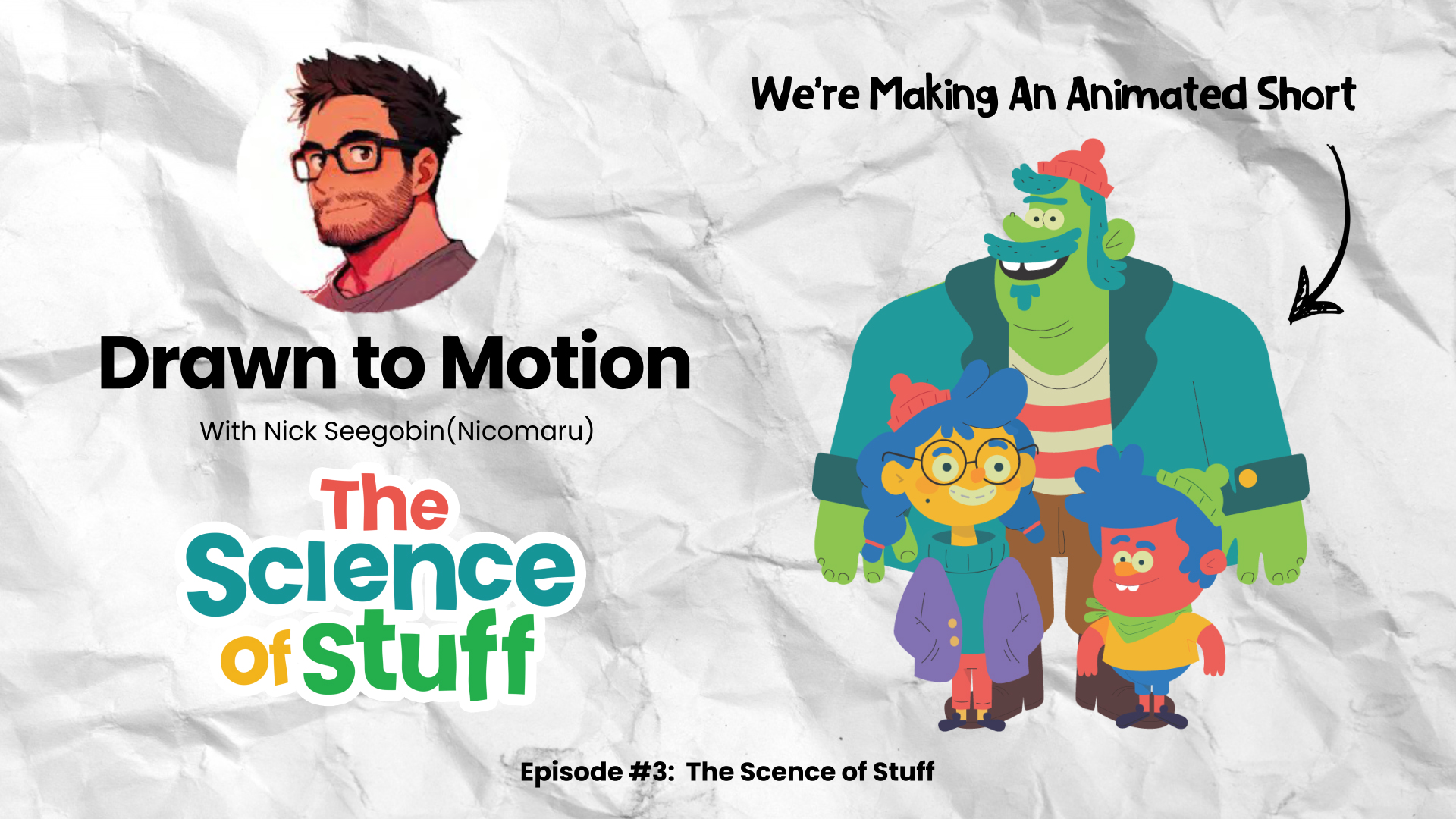
In the latest episode of Drawn To Motion, I take viewers through a high-level look at how I created an animation for The Science of Stuff, an educational series designed to make science exciting and approachable for Caribbean children. While the episode isn’t a deep technical tutorial, it highlights the key stages in my workflow and the thinking that guides each step. My hope is that it not only informs, but also encourages creators to keep pushing forward with their own projects.
Every animation begins with clarity of purpose. For this project, the educational objective came first: explain the difference between vertebrates and invertebrates in a fun and visual way. Establishing this direction early helps guide every creative decision that follows, from pacing and staging to character actions and scene design.
With the learning goal in place, the next step is the script. The script becomes the foundation—the building blocks—of an episode. It defines tone, structure, timing, and how information is delivered. Once the script is locked in, it becomes much easier to move into design and animation with confidence.
Character design is where the project begins to take on a tangible identity. Captain Coconuts, Mot Mot, and the creatures they encounter each needed a distinct look that would appeal to young audiences while supporting the educational themes. After sketching and refining designs, I moved into creating key poses in Photoshop. Key poses are essential—they set the tone for motion, help shape personality, and anchor the behaviour of the characters once they move into animation.
From there, the project shifts into Moho, where the characters come to life. This stage focuses on structure, timing, and keeping the animation clear and readable for young viewers. The goal is always to guide attention and make learning feel natural. After animation, everything is brought together in After Effects to add polish, atmosphere, compositing, and final presentation.
Branding also plays an important role. The visual identity and logo development help ground the series, giving it a cohesive look and feel that supports both education and entertainment.
Once all the creative layers are complete, I record final commentary to tie everything together—connecting the educational message with the visuals and giving young viewers context for what they’re seeing.
If there’s one message I want readers and viewers to take away from this episode, it’s simple: keep creating. Start with what you have, break your big idea into small steps, and move forward consistently. You don’t need the perfect setup or the perfect idea—you just need the willingness to finish. Every completed project, no matter how small, builds momentum.
You can watch the full episode on my YouTube channel, and I hope it inspires you to start or continue your own creative journey.